Word Kitchen
Dinner
Rush
You run a very strange restaurant. The grown-up is head chef, the kids are the crew, and the customers are food critics with cheese for hair. They order by saying the word — never showing it. Your crew has to build it out of ingredient tiles before the kitchen closes.
Instant download · print as many copies as you like, forever
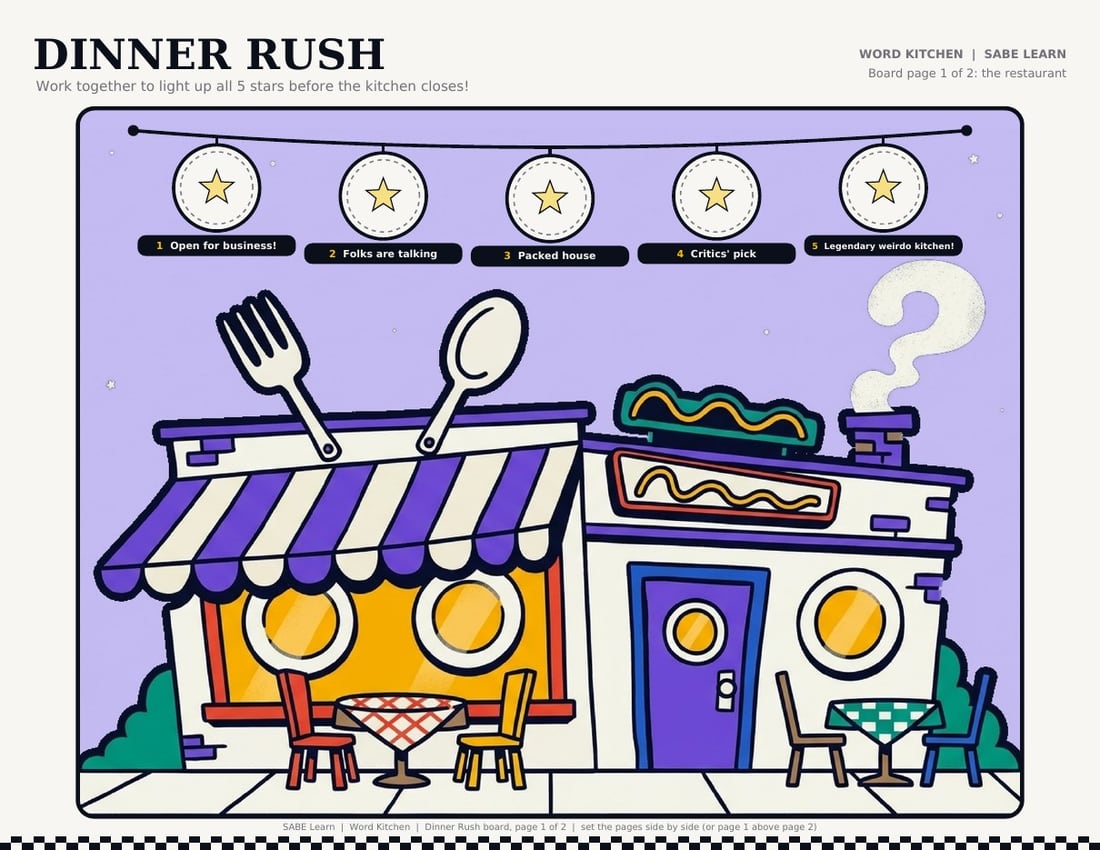
light up
Say it, don't show it.
That one rule is the whole game. The head chef draws an order card and reads the word out loud — "dig" — but never turns it around. There's nothing to copy. A kid who wants to fill that order has to hear the sounds, pull them apart, and hunt down the right tiles: d from the Spice Rack, ig from the Vowel Pantry.
That's decoding, running backwards. And because look-alike tiles are mixed into every station on purpose — bl sitting next to br, cl next to cr — guessing by shape doesn't work. They have to listen.
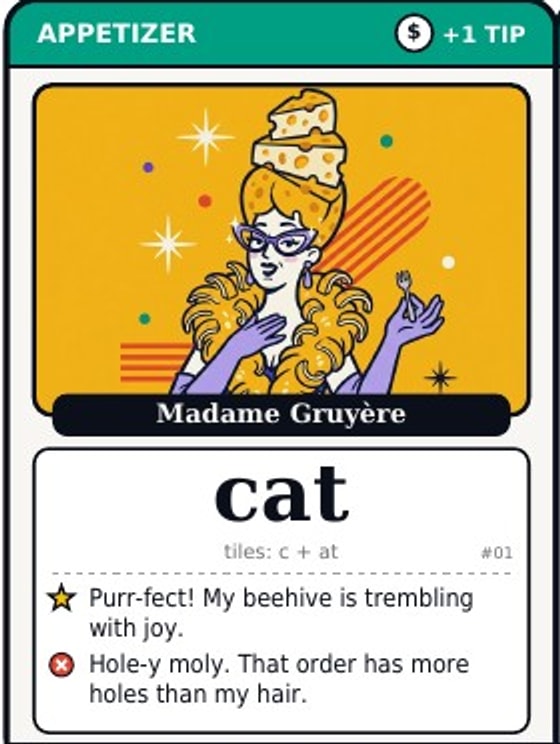
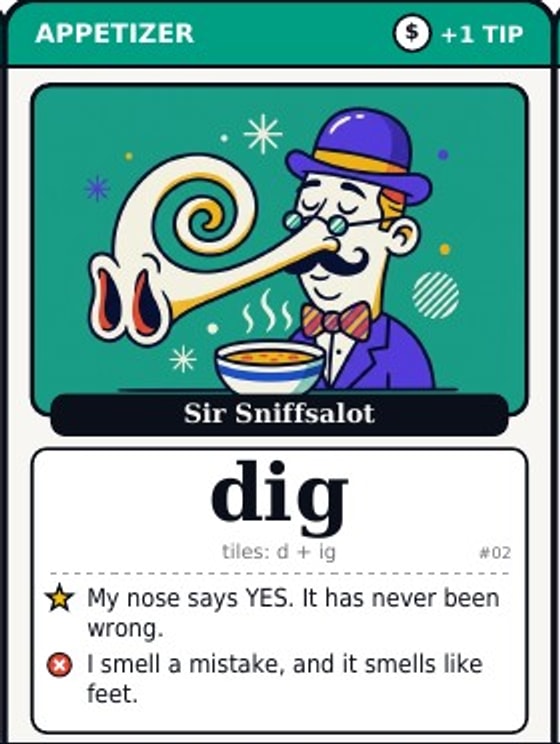
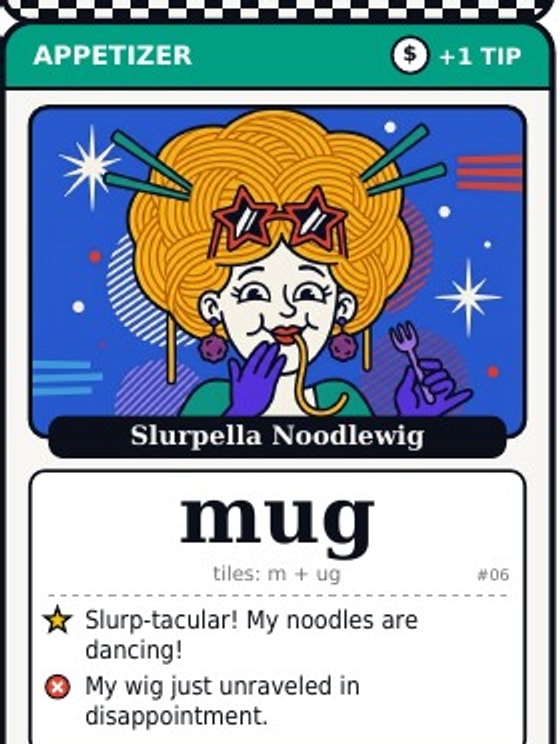
Every card carries a coaching hint for the head chef, plus a delighted line and a devastated line — because the kids are going to ask you to read both.
How a turn works
Learn it in about ninety seconds. There's no reading required to play — the kids never have to read a rule.
Pick a pile
Appetizer is safe and worth +1 tip. Dessert is hard and worth +3. The crew decides how brave they feel.
Chef calls the order
The grown-up draws the top card and says the word out loud. The card stays hidden.
Crew builds it
Kids grab tiles from the five prep stations and snap the word together on the counter.
Taste test
Chef flips the card. Meet the critic — then read their reaction out loud, with feeling.
Tips or trouble
Right: collect tips. Two tips light one star. Wrong: a grumpy customer lands on the meter.
You win
All five star lights are lit. Ten tips, earned one dish at a time. The restaurant is officially legendary.
You lose
Three grumpy customers and the kitchen closes. Grumpy tokens never go away, so cook carefully.
Together
Nobody loses to their little brother. It's one kitchen against thirty orders, which is why a struggling reader will still ask for another round.
Five prep stations
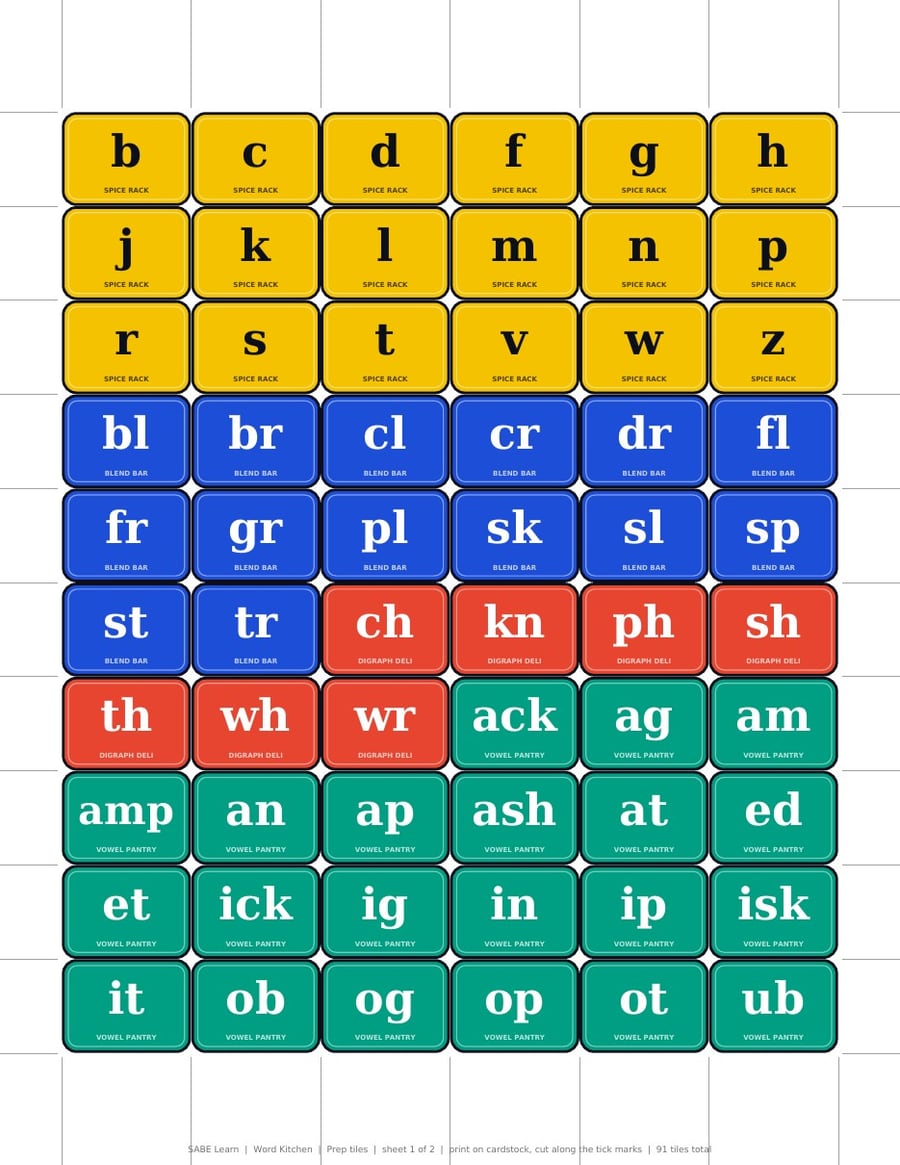
The tiles aren't a random pile of letters. Each station is a phonics skill, sorted by color, labeled with its own sign. Kids learn where sounds live — and by week two they're walking to the right station before the chef finishes saying the word.

Spice Rack
Single starting sounds — the plain, dependable consonants.

Blend Bar
Two sounds blended together, both still audible if you listen.
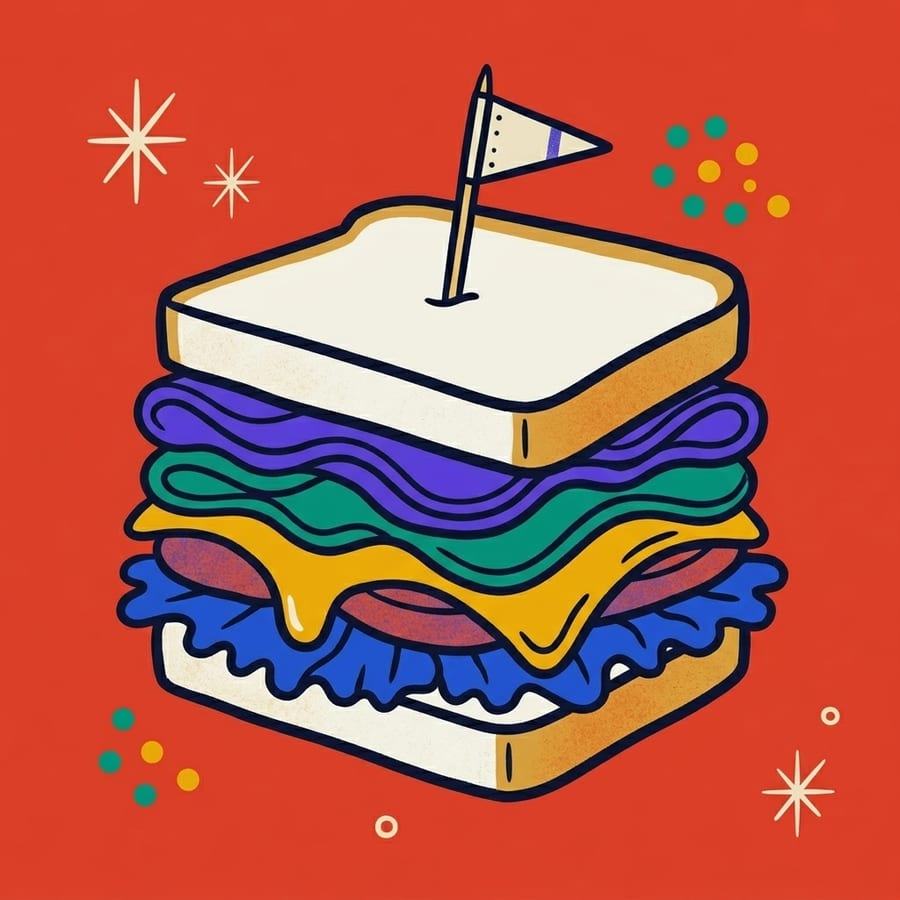
Digraph Deli
Two letters that quietly agree to make one single sound.
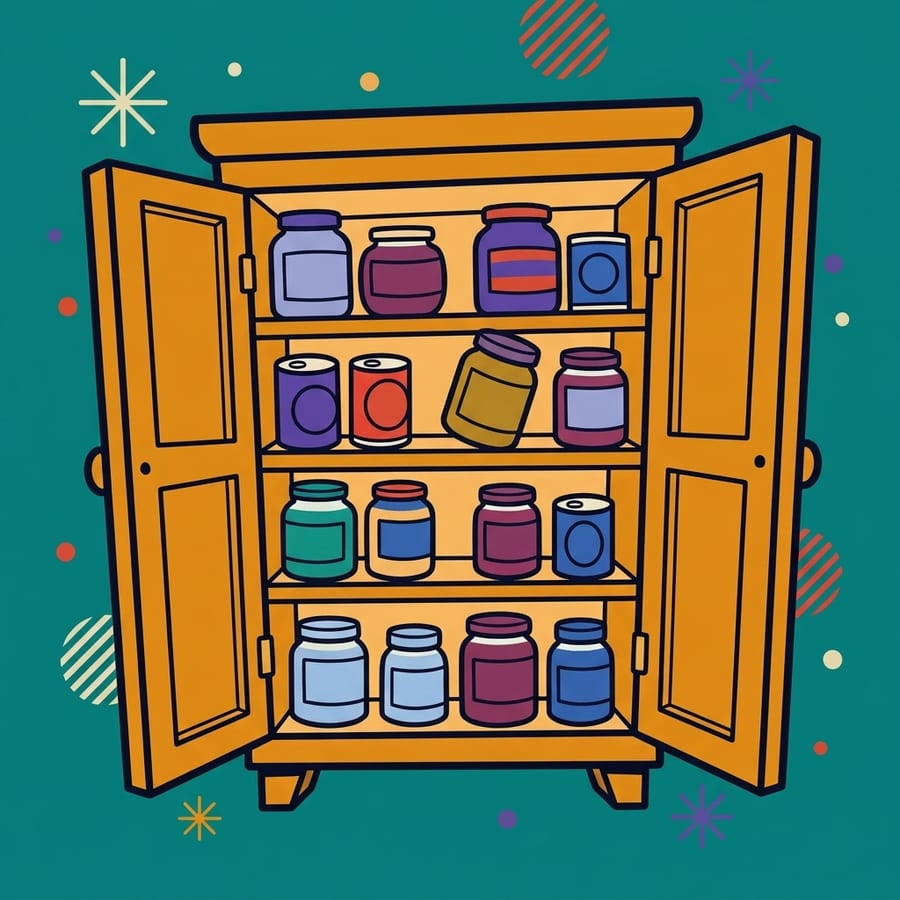
Vowel Pantry
Word endings — the rimes that turn a sound into a word.
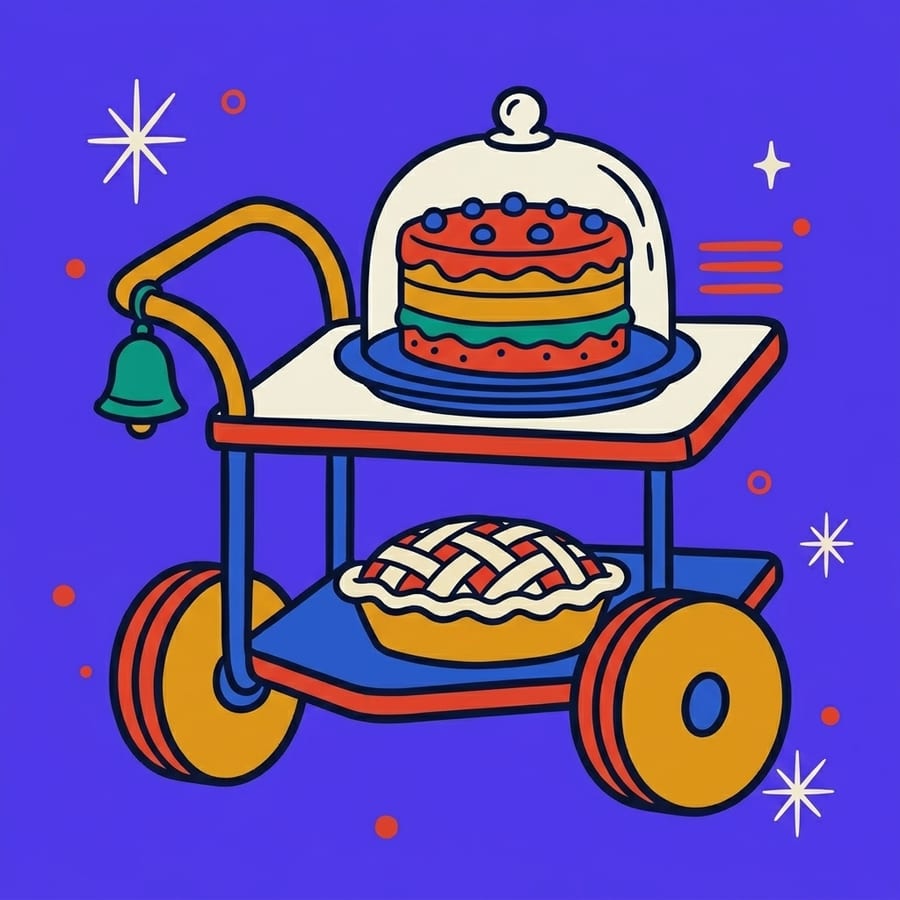
Dessert Cart
Big chunks for two-syllable words. The expensive orders.
About those look-alikes. Eighteen extra tiles are mixed in that sound or look
almost right — bl hiding
beside br,
sk beside
sp.
The tile faces are identical, so there's no way to tell the decoys from the real ones by sight.
That's the whole point.
Meet the critics
Every order card belongs to a food critic with a strong opinion and a worse haircut. Each one has a line for when you nail it and a line for when you don't. Read them out loud. This is the part kids quote at dinner for weeks.

"Purr-fect! My beehive is trembling with joy."

"I smell a mistake, and it smells like feet."

"BAH! Worse than cold soup on a Monday!"

"Arrr, ye walked the plank on that one."

"Leaf me speechless! Bravo, darlings!"

"Oh dear, that's fishy. Try again, dear."
What you're printing
Everything is laid out for a home printer on US Letter. Cut lines are marked. The order cards are true playing-card size and print double-sided so each course gets its own colored back.
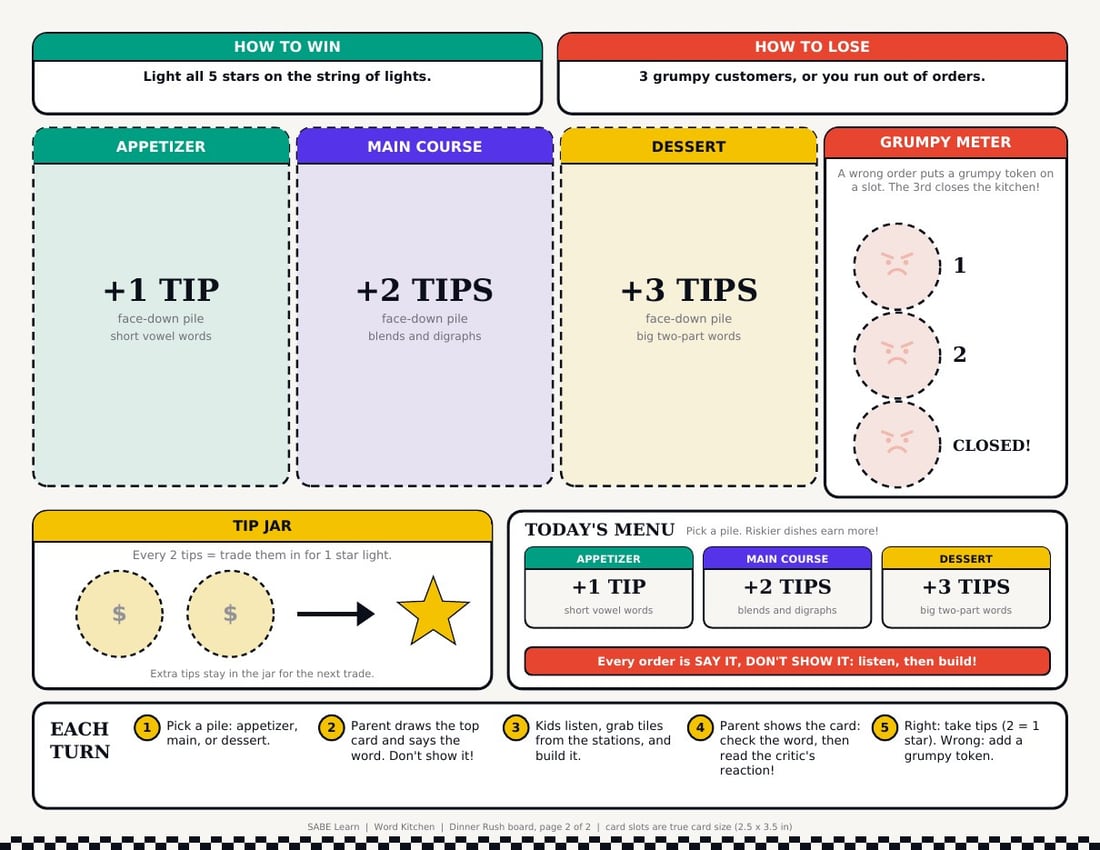
The whole game, printed on the table
Pile slots are cut to true card size. The turn sequence runs along the bottom. How to win and how to lose sit at the top in letters a six-year-old can read. Nobody is going to be flipping back to the rulebook.
- ✓ Three face-down course piles, priced +1, +2 and +3 tips
- ✓ A tip jar that converts two coins into one star light
- ✓ A three-slot grumpy meter that makes the tension real
- ✓ Today's Menu, so the crew can weigh risk against reward
What it's actually practicing
Dinner Rush is a phonics drill wearing a chef's hat. Your kid will think they're running a restaurant. Here's what they're really doing, thirty orders a night.
Pulling words apart by ear
Hearing "stamp" and separating it into st and amp before touching a single tile. No printed word to lean on.
CCSS.RF.1.2
Blends versus digraphs
Two separate stations, because they're two separate things. st keeps both sounds; ch becomes one.
CCSS.RF.1.3a
Short vowels, locked in
The entire appetizer pile is short-vowel CVC words. The easy tier is the one that builds the foundation.
CCSS.RF.1.3b
Two-syllable words
The dessert pile breaks longer words into chunks — muf + fin, kitch + en — which is exactly how second graders should attack them.
CCSS.RF.2.3c
Reading out loud with expression
Those critic lines beg to be performed. Kids who refuse to read a passage will happily do a cabbage countess voice.
CCSS.RF.2.4b
Talking it through
Co-op means the crew has to argue about whether it's br or bl and convince each other. The arguing is the learning.
CCSS.SL.1.1
Standards shown are Common Core, which most states use. If you're in Texas or Virginia, the same skills map to TEKS 1.2 / 2.2 and SOL 1.6 / 2.5 — the descriptions matter more than the codes.
Three ways to run the kitchen
Same box, three difficulty settings. A brand-new first grader and a fluent second grader can play the same game on the same night.
Honest answers
What exactly do I get for $9?
How long does printing and cutting actually take?
Do I need a color printer or cardstock?
My kid is already reading well. Isn't this too easy?
Can one kid play alone with a parent?
What if they build a different real word by mistake?
Is there a refund if it doesn't land?
Service starts in five minutes.
Print it tonight, play it tomorrow. Thirty orders, five stars, and one countess made entirely of cabbage.